
Define the purchase decision
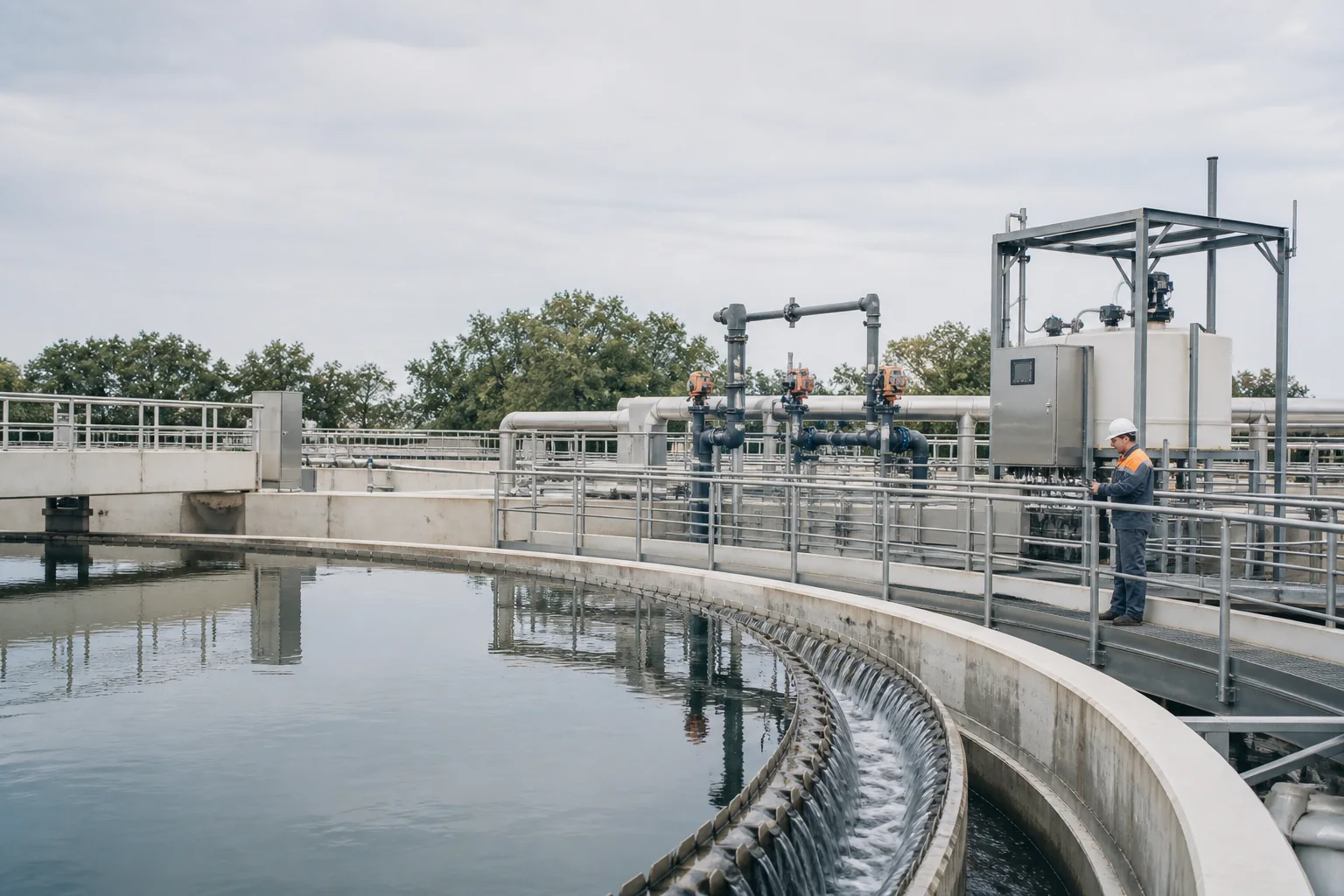
A lamella clarifier needs more than rapidly falling floc in a cylinder. The selected anionic polyelectrolyte must support clear overflow and workable sludge removal at the installed hydraulic and solids loading.
Keep the proposed product identity connected to the tested suspension and the intended separator.
Specify the actual clarification duty
Record feed solids, flow variation, plate arrangement, upstream coagulation and sludge withdrawal route. State whether the limit is water quality, hydraulic loading, solids accumulation or downstream filtration. Keep current maintenance or plate fouling visible before treating every loss of clarity as polymer failure.
The clarification process record supplies the upstream chemical context.
Test floc and residual fines
Compare adjacent profiles under the intended addition sequence and a repeatable shear challenge. Measure settled-water quality as well as interface movement. The rate-versus-clarity method prevents a few fast aggregates from concealing untreated ultrafines.
Bench evidence narrows candidates; it does not reproduce plate geometry, flow distribution or continuous solids withdrawal.
Confirm sustained operation
Hold hydraulics and coagulation stable during the first candidate steps, then observe overflow, sludge accumulation and withdrawal through appropriate residence. Record solids loading and any carryover event. A transient clear output after a feed reduction does not establish polymer-driven capacity.
Check sludge pumping and downstream handling rather than allowing an apparently favorable overflow to hide accumulating inventory.
Check a misleading apparent improvement
If a candidate produces clear overflow briefly after the feed rate falls, repeat at the intended load before crediting extra clarifier capacity. Document sludge withdrawal and the duration of stable operation. Hydraulic relief and a polymer effect are different explanations, and neither should be concealed by a single favorable grab sample.
Retain the comparison conditions and any unresolved acceptance requirement with the proposed purchase.
Set the release boundary
Define the tested loading and feed limits before purchase approval. Do not turn a polymer award into a guarantee that a physically undersized or fouled separator will meet all future flow demands.
| Purchase requirement | Required evidence | Release condition |
|---|---|---|
| Duty | Flow, solids and primary chemistry | Candidate addresses the actual bottleneck |
| Separation | Rate plus residual fines | Cylinder choice is balanced |
| Plant | Continuous overflow and withdrawal | Result survives sustained loading |
Send a focused commercial request
Send clarifier configuration, loading, coagulation, current overflow and sludge-removal records. Identify whether a controlled production trial is available before bulk supply.
Include quantity, package and destination with the sample and RFQ record. Review quality and supply controls with Gongyi Xinqi Polymer Co., Ltd.; confirm grade-specific terms and availability before ordering.
Request a product and supply review
Send the suspension, treatment route and proposed purchasing scope.