
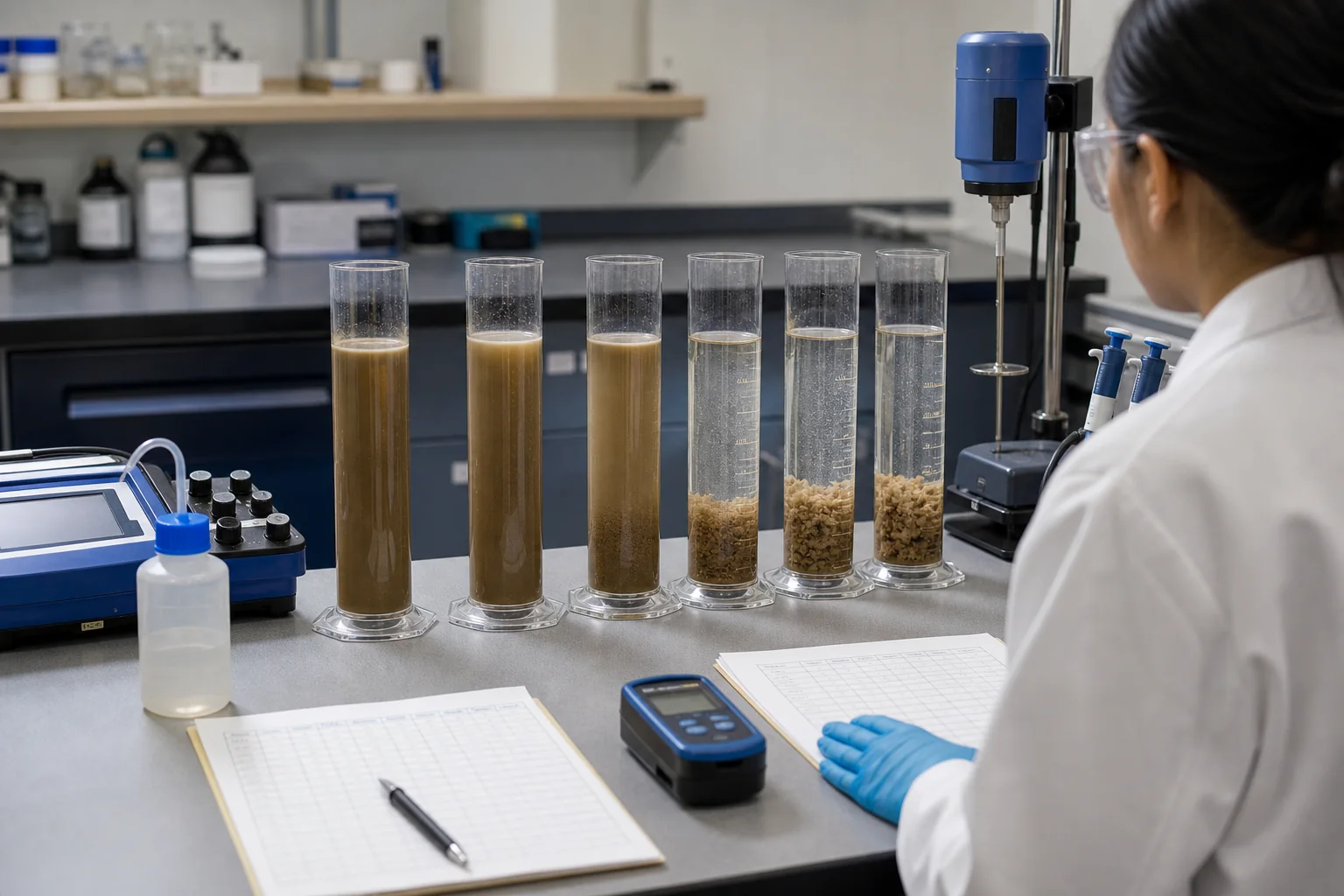
Describe the solids and liquid
State process, particle or sludge origin, solids concentration, particle-size information, pH, conductivity, hardness and temperature. List coagulants, mineral reagents or other chemicals already present.
Include normal and difficult operating conditions. A representative range is more useful than one ideal sample.
Map the addition sequence
Identify current product, active dose, make-down concentration, aging, dilution, pump rate, injection point, mixing and time to the separator. State whether an anionic polymer follows PAC, alum, ferric salt or another conditioner.
Provide photos or a simple process sketch only when they clarify the contact sequence.
Name the measurable target
Choose the limiting output: overflow turbidity, suspended solids, settling rate, underflow density, filtration, recycle quality, sludge volume, throughput or chemical cost. Supply current results and the required range where available.
State sample quantity, commercial quantity, package, destination and required documents so technical and purchasing work can proceed together.
Send the evidence before samples travel.
Keep the solids, water chemistry, addition sequence and separator target on one record.