
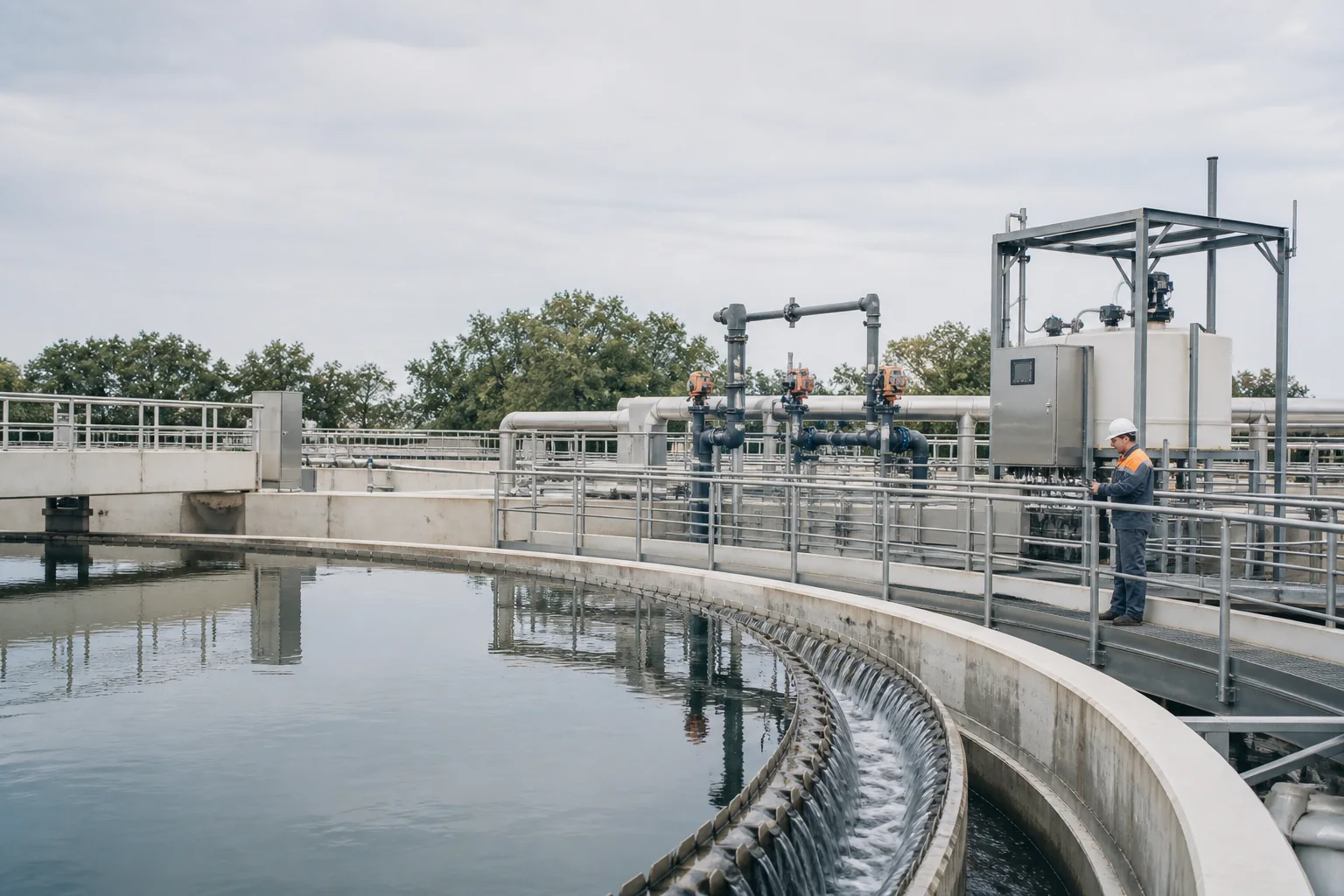
Define the purchase decision
Excavation and tunnelling water can change with ground, works sequence and treatment chemicals. An anionic polyelectrolyte purchase should define the suspended-solids duty without promising removal of every dissolved contaminant.
Keep the proposed product identity connected to the tested suspension and the intended separator.
Describe collected water and ground
Record excavation source, fine-solids character, flow range, pH and any known grout, cement or conditioning additives. Preserve representative difficult feed rather than testing only settled holding-tank water. Where material changes along the works, identify the expected boundaries.
The sample selection procedure helps maintain comparable solids across test jars.
Preserve the authorized treatment sequence
Clarify whether coagulation or pH adjustment occurs before polymer. Keep upstream additions fixed for the first candidate comparison, or map them separately when a combined test is authorized. Record dilution, injection and the hydraulic route to the separator.
Anionic powder is not a substitute for every primary treatment need, and more polymer should not be used to hide an uncontrolled upstream stage.
Set practical plant acceptance
Measure residual suspended solids, settling, sludge removal and throughput under the installed clarification or filtration arrangement. Consider changing flow and retention. The paired-endpoint method supports selection without converting one cylinder into a separator capacity guarantee.
Discharge permission, pH and dissolved contaminants require their own applicable verification; clarity alone is not compliance.
Check a misleading apparent improvement
If a new excavation zone introduces grout or a different fine fraction, repeat the controlled screen before extending the previous grade approval. A familiar turbidity reading can describe a different suspension. Separate any newly required primary treatment from the polymer comparison so the order remains tied to a defensible duty.
Retain the comparison conditions and any unresolved acceptance requirement with the proposed purchase.
Set the release boundary
Tie the initial order to the tested ground and treatment route. Keep a retest trigger for changed excavation conditions or new additives and avoid unrestricted claims about all future site water.
| Purchase requirement | Required evidence | Release condition |
|---|---|---|
| Source | Ground and additive context | Sample represents intended use |
| Sequence | Defined upstream treatment | Polymer role is clear |
| Output | Solids and handling measurements | Approval stays within verified scope |
Send a focused commercial request
Send ground and water sources, flow variation, upstream chemistry, equipment and solids targets. Distinguish treatment qualification from separate environmental acceptance requirements.
Include quantity, package and destination with the sample and RFQ record. Review quality and supply controls with Gongyi Xinqi Polymer Co., Ltd.; confirm grade-specific terms and availability before ordering.
Request a product and supply review
Send the suspension, treatment route and proposed purchasing scope.