
Define the purchase decision
The first commercial shipment should deliver the product that passed qualification, not an unspecified equivalent sharing the same family name. Purchasing and receiving need one traceable path from sample to routine supply.
Keep the proposed product identity connected to the tested suspension and the intended separator.
Reconcile the ordered identity
Match the sample code, supplier grade, quotation, order line and offered document set. Resolve aliases before shipment. The supplier specification record provides the qualification baseline, while agreed change notification prevents undocumented substitutions.
Keep any outstanding plant-test limits explicit instead of treating a first order as unrestricted technical approval.
Inspect receiving condition
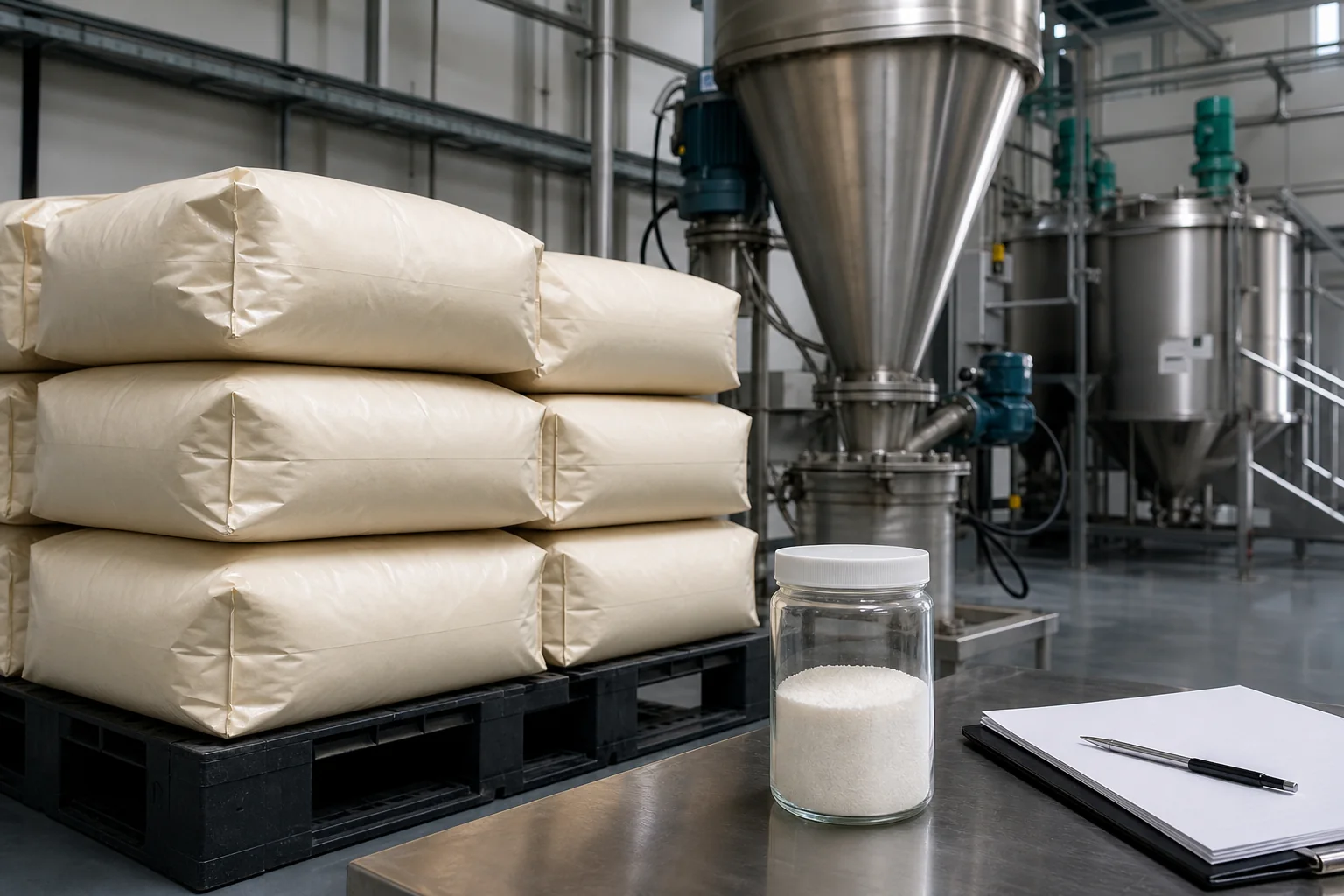
Check lot marks, package count, stated net weight, seals, moisture exposure and delivery documents. Segregate damaged or ambiguous material under the receiving procedure. Package size must fit storage and handling equipment; it is not a reason to bypass identification.
Follow the current SDS and site procedure when opening, transferring or cleaning up powder and hydrated spills.
Compare retained and incoming material
Prepare both with the same water, concentration and age, then test on matched fresh suspension. Record relevant residue and separation endpoints. If both differ from the historic response, check feed and preparation before concluding that the shipment changed.
Use the preparation procedure to distinguish hydration faults from a reproducible lot difference.
Check a misleading apparent improvement
If the arriving code differs from the accepted sample, pause identity release before running through large quantities. Ask the supplier to reconcile the code and documents. A satisfactory receiving jar cannot by itself establish that an undocumented substitution meets every agreed product, traceability or commercial requirement.
Retain the comparison conditions and any unresolved acceptance requirement with the proposed purchase.
Set the release boundary
Document who releases or holds the lot and retain the evidence. Confirm the first stable production result within the already qualified feed range; do not silently extend approval to a different process.
| Purchase requirement | Required evidence | Release condition |
|---|---|---|
| Identity | Sample, grade, order and lot chain | Shipment is the intended material |
| Condition | Package and document inspection | Receiving concerns are resolved |
| Response | Paired retained and incoming test | Release is supported by evidence |
Send a focused commercial request
Send approved and received code references, package observations, COA and matched test records. Identify whether the concern is traceability, handling condition or application performance.
Include quantity, package and destination with the sample and RFQ record. Review quality and supply controls with Gongyi Xinqi Polymer Co., Ltd.; confirm grade-specific terms and availability before ordering.
Request a product and supply review
Send the suspension, treatment route and proposed purchasing scope.