
Separate identity from application performance
A specification can identify a product and lot, but it cannot guarantee performance on every suspension. Keep supplier identity data beside a representative application trial with controlled preparation and active dose.
Avoid procurement decisions based on one nominal molecular-weight or viscosity claim.
Request method-aware data
Ask for product form, ionic character or hydrolysis reporting method, molecular or viscosity indicator method, moisture or active basis, dissolution guidance and particle information where relevant. Compare values only when methods and units are compatible.
Use clear grade codes so samples, documents, quotation and shipment remain connected.
Review the COA
Choose COA fields that verify lot identity and agreed product controls. Record limits, methods and release logic. Do not add application endpoints to a factory COA unless a defined representative test has been agreed.
Retain the approved sample and the exact preparation record for later comparison.
Check safety and handling documents
Request the current SDS, TDS and handling guidance. Review powder dust control, slip hazard, storage, spill response and compatibility with the customer's dosing equipment.
Confirm document language and revision requirements before shipment.
Define packaging and logistics
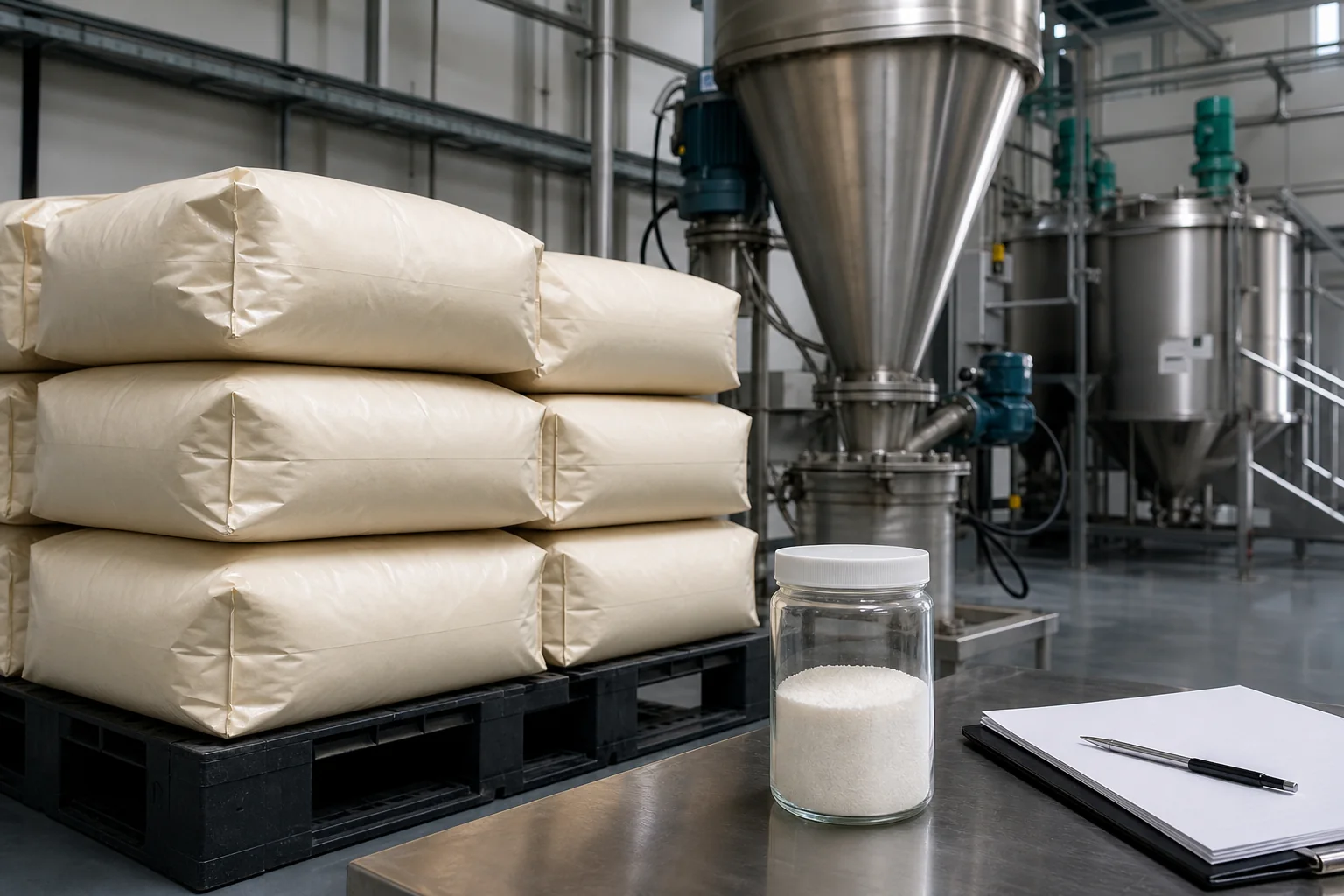
State net weight, small-bag or big-bag preference, palletization, moisture protection, container quantity, destination and Incoterm request. Inspect packaging integrity on receipt and store product dry.
Include sample lead time and commercial delivery timing in the comparison.
Compare delivered treatment cost
Calculate product consumption at the repeated active-dose window and include throughput, water recovery, sludge handling and operational stability. A lower price per kilogram can cost more when dose or downstream load rises.
Gongyi Xinqi Polymer Co., Ltd. can align samples, product documents, packaging and export quotation with the process data provided in the RFQ.
Create a controlled supplier sample plan
Send each supplier the same feed description, target and test protocol. Blind or code samples where practical so visible packaging does not influence observation. Prepare every powder under its documented requirement and compare equal active or clearly stated as-supplied dose.
Repeat finalists on fresh process material and retain enough powder for confirmation. One successful beaker is not a supply qualification.
Audit analytical comparability
Ask for the method, temperature, concentration and basis behind viscosity, charge or hydrolysis, moisture and residual-monomer statements. Values measured under different conditions may describe different things.
Use agreed COA controls to verify identity and consistency; use the application trial to verify process suitability. Do not substitute one for the other.
Inspect the production lot on receipt
Check label, grade, lot, bag count, net weight, pallet condition, moisture damage and document match. Quarantine damaged or ambiguous material under the customer's quality procedure.
Retain a sealed sample from the received lot when continuity is important. Compare it with the approved sample using the same water and reference suspension.
Assess operational fit
Confirm the powder feeds through existing equipment, hydrates within available residence and produces a stock the pumps can deliver. Review dust control, slip management, storage capacity and operator workload.
A product with good separation but incompatible make-down requirements may require equipment changes that belong in the commercial decision.
Write a complete purchase specification
Include grade code, accepted document set, packaging, label and lot traceability, quantity tolerance, destination, delivery terms and change-notification expectations. Attach the customer application window as a separate operational record where appropriate.
Review total treatment cost at the approved dose and process result. Keep price validity, freight basis and delivery schedule visible so quotations are compared on the same commercial scope.
Require controlled change notification
Agree which production, raw-material, method, specification, packaging or manufacturing-location changes require notice before supply. The notification should provide enough time and sample quantity for a representative confirmation when process risk justifies it.
Change control protects continuity without claiming that manufacturing can never evolve. Keep the approved grade code and revision visible on purchase and receiving records.
Evaluate technical response quality
Give finalists the same abnormal-result scenario and process data. Assess whether the response asks for missing evidence, checks active dose and preparation, and proposes a controlled trial rather than an unsupported universal dosage.
Commercial supply includes the ability to connect samples, documents, lot identity and troubleshooting. Record contacts, response path and escalation expectations beside price and logistics.
Close the trial-to-order traceability
Before placing the first commercial order, reconcile the approved sample code, supplier grade, quotation line, COA template, package and manufacturing lot logic. Resolve aliases or translated names that could create an unintended substitution.
On receipt, verify the same chain through label, documents and retained sample. Release material under the customer's quality procedure only after identity and packaging checks are complete.