
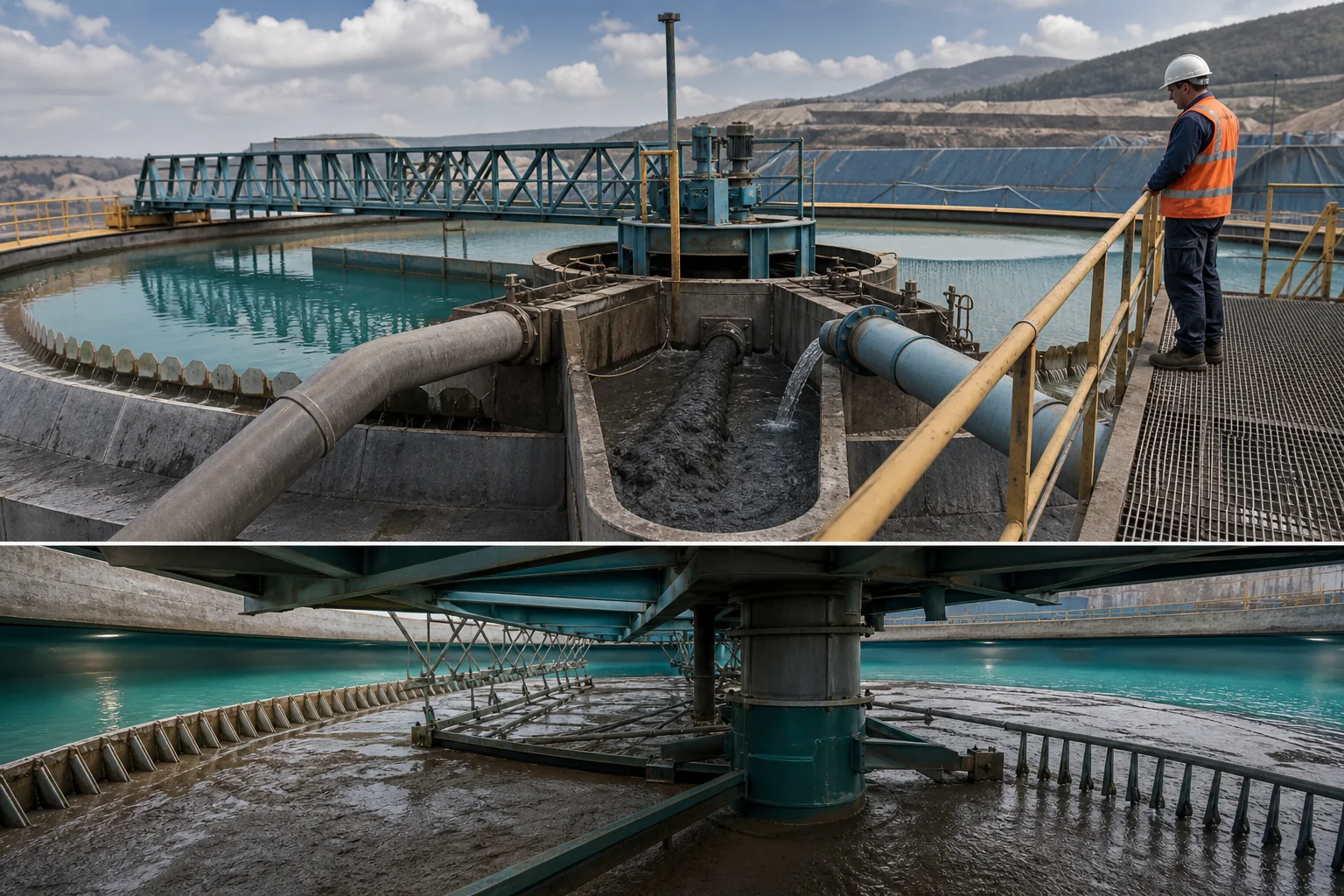
Define the suspension before the grade
Record mineral or process origin, particle-size distribution, solids concentration, pH, conductivity, hardness, temperature and upstream reagents. High molecular weight is useful only when the chain can adsorb, extend and bridge the actual particles.
Use fresh representative samples and keep coarse solids distributed while splitting tests. A sample that has already classified in the bucket can favor one candidate for the wrong reason.
Separate bridge length from anionicity
Molecular size influences reach, solution viscosity and shear sensitivity. Anionic charge influences adsorption and chain conformation in the available water chemistry. Compare adjacent profiles instead of treating one laboratory viscosity number as a complete product specification.
Ask how the supplier reports charge or hydrolysis and molecular indicators. Different methods can produce values that should not be compared as though they were identical.
Test feedwell distribution
A high-molecular-weight solution needs enough dilution and contact volume to reach the slurry without a destructive high-shear zone. Observe the injection point, feedwell dilution, mixing energy and residence before changing the product dose.
Measure initial settling, zone-settling rate, overflow clarity, settled-bed compaction and floc recovery after defined shear. Very large floc can settle quickly yet trap water or break in the feedwell.
Approve a controllable operating band
Repeat the useful dose range on normal and difficult feed. Select a middle condition that survives feed variability, pump accuracy and normal water-chemistry movement.
Carry the exact sample code, lot, preparation water, stock age and test method into the plant trial. Compare delivered treatment cost with throughput, overflow recycle and underflow density rather than polymer price alone.